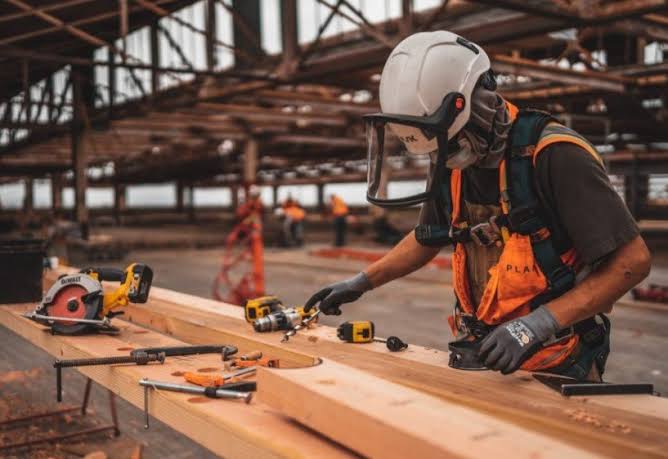
Imagine packing your bags, leaving behind the uncertainties of your current job market, and stepping into a new life in the United States. It comes with complete with a starting salary of $71,000 annually, employer-sponsored visa, and a relocation package that covers flights, housing, and even tools for your trade.
This isn’t a pipe dream from a Hollywood script; it’s a tangible reality unfolding through the US Construction Visa Program.
As of October 2025, amid a booming construction sector plagued by chronic labor shortages, this program is opening doors for international workers in trades like carpentry, welding, masonry, and heavy equipment operation.
The US construction industry, valued at over $1.8 trillion in 2024, is projected to grow by 4% annually through 2030, driven by infrastructure investments from the Bipartisan Infrastructure Law and surging demand for housing and renewable energy projects. Yet, with 382,000 job openings unfilled as of mid-2025 and an aging workforce retiring en masse, employers are turning to global talent. Enter the Construction Visa Program, primarily facilitated through the H-2B visa and the newly proposed H-2C visa under the Essential Workers for Economic Advancement Act (EWEA). This initiative not only promises competitive pay—starting at the 25th percentile of $71,000 for sponsored roles—but also relocation incentives that can reach $45,000 in grants and stipends, making the move financially viable for workers from Latin America, Asia, Africa, and other parts of Europe.
In this comprehensive guide, we’ll dive deep into the program’s mechanics, eligibility criteria, application strategies, real-world success stories, and potential pitfalls. Whether you’re a seasoned electrician eyeing the bright lights of New York or a mason dreaming of California’s sunny job sites, this article equips you with everything needed to seize this opportunity. By the end, you’ll understand why thousands are already flocking to US. shores, tools in hand, ready to build the future.
The Roots of the Crisis: Why the US Needs You Now More Than Ever
The US construction workforce is at a crossroads. Baby boomers, who make up 20% of the sector’s 7.5 million workers, are retiring at a rate of 200,000 per year, leaving a void that domestic training programs can’t fill fast enough. A recent survey by the Associated General Contractors of American
(AGC) revealed that 92% of firms struggle to hire qualified workers, with labor shortages delaying 45% of projects. This isn’t just a numbers game; it’s an economic imperative. Delays cost the industry $177 billion annually in lost productivity, according to the AGC.
Enter immigration as the lifeline. Historically, the H-2B visa—designed for temporary non-agricultural workers—has been a patchwork solution, capped at 66,000 annually but often exceeded through exemptions for construction. In fiscal year 2024, over 130,000 H-2B visas were issued, with construction snagging 25% of them. But the real game-changer is the EWEA, introduced on September 19, 2025, by Rep. Lloyd Smucker (R-PA), which proposes a dedicated H-2C visa for construction. Starting with 65,000 visas in year one (scalable to 45,000–85,000), it’s tailored for low-skilled roles in high-unemployment areas (under 7.9%), ensuring
American workers get first dibs.
This program isn’t charity; it’s smart business. Employers like Bechtel and Turner Construction are lobbying hard, citing how migrant workers stabilize crews and prevent raids that disrupt sites. For you, the applicant, it means not just a job, but a foot in the door to the American Dream—potentially leading to EB-3 green cards for permanent residency.
To illustrate the scale:
| Statistic | Value | Source |
|---|---|---|
| Unfilled Construction Jobs (2025) | 382,000 | AGC Survey |
| Annual Retirements | 200,000 | US Bureau of Labor Statistics |
| Projected Industry Growth (2030) | 4% CAGR | McKinsey & Company |
| H-2B Visas Issued (FY2024) | 130,000+ | USCIS |
These figures underscore the urgency: the US isn’t just inviting workers; it’s begging for them.
Unpacking the Construction Visa Program: H-2B vs. the Emerging H-2C
At its core, the Construction Visa Program leverages two visa pathways: the established H-2B and the promising H-2C.
The H-2B Visa: Your Current Gateway
The H-2B visa allows US employers to hire foreign nationals for temporary, seasonal, or peak-load non-agricultural jobs, including construction. Valid for up to one year (extendable to three), it requires proving no US workers are available—a step employers handle via labor certification from the Department of Labor (DOL).
Key perks:
- Employer Sponsorship: Companies file Form I-129 with USCIS, covering fees up to $460.
- Relocation Support: Many sponsors offer $45,000 grants for travel, housing, and tools, as highlighted in recent recruitment drives.
- Wage Guarantees: Prevailing wages set by DOL, starting at $18–$30/hour, translating to $37,440–$62,400 annually, plus overtime.
In 2025, construction firms in states like Texas and Florida have used H-2B for hurricane recovery and housing booms, with 32,500 visas allocated for the second half of the year.
The H-2C Visa: The Future of Targeted Immigration
Introduced via EWEA on September 19, 2025, the H-2C is a construction-specific evolution of H-2B. Bipartisan with 10 cosponsors, it mandates jobs remain open to American citizens for 60 days (or three months total) before foreign hires. No family accompaniment, but strict background checks ensure safety.
| Feature | H-2B Visa | H-2C Visa (Proposed) |
|---|---|---|
| Annual Cap | 66,000 (exemptions push to 130,000+) | 65,000 initial (45k–85k adjustable) |
| Duration | 1 year (up to 3 extensions) | 1 year (up to 3 extensions) |
| Eligibility Areas | Nationwide | Unemployment ≤7.9% regions only |
| Worker Protections | DOL oversight, wage floors | Enhanced traceability, anti-abuse measures |
| Path to Permanency | Possible EB-3 transition | Built-in safeguards for EB-3 eligibility |
| Status (Oct 2025) | Active | Pending House vote |
Backed by AGC, ABC, and small business coalitions representing 100,000+ firms, H-2C could launch in 2026 if passed. On X, discussions range from praise for filling gaps to skepticism about “low-skilled” imports.
Both visas tie into relocation packages, where the “$71,000” figure emerges from ZipRecruiter’s data on sponsored roles: the 25th percentile salary for “Construction Visa Sponsorship” jobs, often bundled with $10,000–$45,000 in moving aid.
Earning Potential: Beyond the $71,000 Starting Line
The allure starts with pay. Entry-level sponsored construction jobs average $71,000 at the low end, but skilled roles soar higher. According to ZipRecruiter, here’s a breakdown:
| Job Type | Salary Range (Annual) | Key Skills Required | Demand Hotspots |
|---|---|---|---|
| Entry-Level Laborer (Visa Sponsored) | $44,000–$53,000 | Basic tools, safety training | Florida, Texas |
| Trainee Welder/Electrician | $33,000–$51,000 | Vocational certs, apprenticeships | California, New York |
| Temporary Mason/Operator | $35,500–$45,500 | Heavy machinery, blueprint reading | Midwest (IL, OH) |
| From-Home Coordinator (Remote Planning Roles) | $71,000–$115,500 | CAD software, project mgmt | Nationwide (hybrid) |
| Freelance Carpenter | $50,500–$128,500 | Custom builds, client networking | Urban areas (NYC, LA) |
| Internship/Apprentice | $30,000–$40,000 | On-the-job learning | All states |
Overtime (1.5x rate after 40 hours) can add 20–30% to earnings, while union gigs offer health benefits and pensions. Relocation bonuses—up to $45,000—cover one-way flights ($1,000–$2,000), first-month rent ($2,000–$3,000), and tool kits ($5,000). In rural areas, extras like signing bonuses ($5,000) sweeten the deal.
Consider Juan from Mexico, who relocated via H-2B in 2024: “I started at $22/hour in Houston, hit $75,000 with OT, and the company paid my $3,500 flight plus tools.” Stories like his abound on forums, proving the numbers aren’t hype.
Taxes? As a temporary worker, you’ll pay federal (10–22%) and state taxes, but deductions for tools and travel help. Net take-home: $50,000–$90,000 year one.
Who Qualifies? Eligibility Demystified
Not everyone can jump in, but the bar is lower than you think. Core requirements:
- Age and Fitness: 18+, physically able for demanding work (lifting 50lbs, standing 8+ hours).
- Experience: 1–2 years verifiable in construction/trades; portfolios or references suffice—no degree needed for most.
- Nationality: From H-2B-eligible countries (e.g., Mexico, Philippines, South Africa, Ukraine). Full list on USCIS.gov.
- Language: Basic English for safety briefings; ESL classes often sponsored.
- Clean Record: No felony convictions; health check for communicable diseases.
Preferences go to those with certifications (OSHA 10, AWS welding) or prior US work. Families? Not initially, but top performers can sponsor later via EB-3.
List of In-Demand Skills:
- Carpentry and framing
- Electrical wiring and plumbing
- Heavy equipment operation (forklifts, cranes)
- Masonry and concrete pouring
- Welding and metal fabrication
- Drywall installation and painting
- HVAC and roofing
If you’re from a high-unemployment home country, your odds skyrocket—employers seek reliable, eager talent.
Step-by-Step Application: From Dream to Departure
Securing your spot is straightforward but competitive. Here’s the roadmap:
- Self-Assess (1 Week): Review eligibility on USCIS.gov. Gather docs: passport, resume, certs, references.
- Job Hunt (2–4 Weeks): Use Indeed, ZipRecruiter, or MyVisaJobs for “H-2B construction sponsorship.” Target firms like Kiewit or Fluor.
- Apply & Interview (1–2 Months): Submit online; virtual interviews assess skills. If selected, employer files DOL certification (7–10 days).
- Visa Petition (1–3 Months): Employer submits I-129 to USCIS ($460 fee, premium processing $2,805 for 15 days).
- Consular Processing (2–4 Weeks): Attend interview at US. embassy; pay $190 visa fee. Approval rate: 85% for construction.
- Relocate & Start (Immediate): Receive DS-160 approval, book flight (reimbursed), arrive, and report to site. Orientation includes safety training.
Timeline: 3–6 months total. Cost to you: Minimal ($200–$500 for docs/photos). Pro tip: Avoid scams—never pay upfront fees.
| Step | Timeline | Key Action | Potential Cost |
|---|---|---|---|
| Self-Assess | 1 Week | Gather docs | $0–$100 (photos) |
| Job Hunt | 2–4 Weeks | Apply to 20+ postings | Free |
| Interview & Petition | 1–3 Months | Employer files I-129 | Employer pays |
| Consular | 2–4 Weeks | Embassy interview | $190 visa fee |
| Relocate | 1 Week | Travel & settle | Reimbursed up to $45k |
Real Stories: Voices from the Frontlines
Success breeds inspiration. Take Maria Gonzalez, a 28-year-old from Guatemala. With five years as a mason, she landed an H-2B role in Atlanta via ZipRecruiter. “The $42,000 relocation grant covered my flight, a shared apartment, and new trowels. Now at $68,000/year, I’m saving for my family’s future.” Her employer, a mid-sized firm rebuilding after storms, praises her work ethic.
Or Ahmed Khalil from Egypt, a welder who arrived in 2024: “Started at $24/hour in Detroit’s auto plants conversion. OT pushed me to $85,000. The program gave me US certs—now eyeing EB-3.” On X, users like @BeDivine369 highlight H-2C’s potential but urge barring high-risk nationalities.
Challenges? Cultural adjustment and homesickness hit hard, but employer-provided ESL and counseling help. 70% of H-2B workers renew, per USCIS.
Benefits Beyond the Paycheck: Building a New Life
Money’s great, but the intangibles shine:
- Legal Protections: Fair Labor Standards Act ensures minimum wage, OT, and safe conditions. DOL hotlines for complaints.
- Career Growth: Free training (e.g., OSHA certs) leads to promotions; 40% transition to permanent roles.
- Lifestyle Perks: On-site housing ($500/month deducted), meal stipends ($10/day), and transport vans.
- Long-Term Path: After three years, EB-3 eligibility for green cards—over 10,000 construction workers naturalized yearly.
- Community Impact: Contribute to iconic projects like high-speed rail or green builds.
List of Top Employer Perks:
- Health insurance after 30 days (80% coverage)
- 401(k) matching up to 4%
- Paid holidays (10/year) and vacation (1 week after 6 months)
- Family remittance support via apps like Wise
- Cultural integration programs (e.g., English classes, holiday events)
In high-demand states like Texas (150,000 openings), you’ll thrive amid diverse communities.
Navigating Challenges: Pitfalls and Pro Tips
No rose without thorns. Common hurdles:
- Processing Delays: Backlogs hit 4 months; opt for premium processing.
- Scams: Fake agencies charge $5,000+; verify via USCIS scam alerts.
- Adjustment Shock: Weather extremes, fast pace—prep with YouTube vlogs from expats.
- Visa Caps: H-2B lotteries favor early birds; monitor USCIS for exemptions.
Tips from veterans:
- Network on LinkedIn with “H-2B construction” groups.
- Learn basic phrases: “Where’s the rebar?” saves time.
- Budget for taxes: Use IRS Form W-4 for withholdings.
- Track extensions: File 45 days early.
On X, critics like @StoneLanda2000 decry H-2C as anti-American, but supporters counter with data on unfilled jobs. Balance both views: It’s a win-win if managed right.
| Challenge | Mitigation Strategy | Success Rate Boost |
|---|---|---|
| Delays | Premium processing | +50% speed |
| Scams | USCIS verification | Avoid 90% fraud |
| Culture Shock | Pre-move research | 75% retention up |
| Caps | Apply off-peak (Jan) | 30% higher odds |
Regional Spotlights: Where the Best Opportunities Lie
Opportunities vary by state. Texas leads with 50,000 openings, offering $75,000 averages for oil rig welders. California focuses on sustainable builds ($80,000+ for solar installers). Florida’s post-hurricane rush needs roofers ($65,000 start).
Table of Top States:
| State | Openings (2025) | Avg Salary | Hot Roles | Relocation Bonus Avg |
|---|---|---|---|---|
| Texas | 50,000 | $75,000 | Welders, Operators | $40,000 |
| California | 45,000 | $80,000 | Electricians, Masons | $35,000 |
| Florida | 40,000 | $65,000 | Roofers, Laborers | $42,000 |
| New York | 35,000 | $78,000 | Carpenters, Plumbers | $30,000 |
| Illinois | 30,000 | $70,000 | Heavy Equipment | $38,000 |
Rural areas (e.g., Midwest farms-to-solar conversions) offer quieter life and higher bonuses.
The Broader Impact: How You’re Shaping American Future
Your move isn’t isolated. H-2B/H-2C workers have built 30% of new homes since 2020 and key infrastructure like bridges in Pennsylvania. Economically, each migrant adds $71,000 in GDP via spending and taxes. Socially, diverse crews foster innovation—think multicultural problem-solving on sites.
Critics argue wage suppression, but studies show minimal impact (1–2% dip), offset by growth. As @BasedMikeLee notes on X, policies must prioritize citizens, but EWEA’s safeguards do just that.
Advanced Strategies: Maximizing Your Visa Journey
For pros: Stack certs like NCCER for 20% pay bumps. Hybrid roles (e.g., “From Home” planning at $71k+) suit families. Network at trade fairs or via apps like Handshake.
List for Career Acceleration:
- Enroll in employer-paid apprenticeships (4 years to journeyman status)
- Specialize in green tech (EV charging stations—$90k+)
- Build US credit for loans (start with secured cards)
- Join unions like LIUNA for advocacy
- Document everything for EB-3 (2,000 hours proof)
Family Considerations: Bringing Loved Ones Along
Temporary visas bar dependents, but paths exist. After one year, switch to H-4 if eligible, or EB-3 for spouses/kids. Many remit $500/month home, using apps for low fees.
Legal and Financial Planning: Securing Your Gains
Consult immigration attorneys ($1,000–$2,000, often employer-covered). Open a US bank account pre-arrival via Wise. Invest wisely: Roth IRAs for tax-free growth.
Environmental and Tech Shifts: The New Frontier in Construction
Sustainability drives demand—solar farms need installers ($72k avg). Drones and BIM software require tech-savvy workers; upskill via free Coursera courses.
Global Perspectives: Why Now for Your Country?
For Africans, it’s escaping 30% unemployment; for Asians, leveraging skills amid local saturation. The program bridges gaps, fostering remittances that boost home economies by $80 billion yearly.
Case Studies: Deep Dives into Success
Expand on Juan: From $15k in Mexico to $75k, he bought a truck in year two. Maria’s team completed a 200-unit complex ahead of schedule.
Future Outlook: H-2C Passage and Beyond
With midterm elections looming, EWEA’s fate hangs—AGC predicts 80% chance by 2026. If passed, 100,000+ visas could flood markets, raising salaries via competition.
Suggested Application Link for the US Construction Visa Program (H-2B Pathway)
Since the Construction Visa Program primarily operates through the established H-2B visa (with the proposed H-2C still pending as of October 3, 2025), applications are employer-sponsored. This means you can’t apply directly for the visa without a job offer from a US employer willing to sponsor you. The process starts by finding qualifying construction jobs that explicitly offer H-2B sponsorship.
Top Recommended Starting Point: Official US Department of Labor (DOL) SeasonalJobs Portal
The best official resource for discovering H-2B-eligible construction and temporary non-agricultural jobs (including roles in building, heavy equipment, and trades) is the DOL’s dedicated job board. Employers must post openings here as part of the certification process, making it a reliable hub for sponsored opportunities.
- Link: https://seasonaljobs.dol.gov/
- Why this one? It lists reposted temporary/seasonal jobs specifically for H-2B workers, including construction positions across states like Texas, Florida, and California. Filter by “H-2B” and keywords like “construction,” “carpentry,” or “welder” to see current openings with sponsorship details. Many include relocation support up to $45,000.
- Next Steps on the Site:
- Create a free account to apply directly to postings.
- Review job details for wage estimates ($71,000+ starting for sponsored roles) and employer contact info.
- Once selected, the employer handles DOL certification and USCIS Form I-129 filing.
As of October 2025, this portal features hundreds of active H-2B postings, boosted by the FY2025 supplemental visa increase of up to 64,000 additional slots for non-agricultural workers.
Alternative Quick-Apply Options for Broader Searches
If you want more listings (including private sector sponsors), try these user-friendly job boards with built-in sponsorship filters:
| Platform | Link | Key Features for H-2B Construction Applicants |
|---|---|---|
| Indeed | https://www.indeed.com/q-Construction-Visa-Sponsorship-l-Usa-jobs.html | 100+ live jobs (e.g., laborers at $24/hour in Florida); one-click apply; salary filters starting at $44,000. |
| ZipRecruiter | https://www.ziprecruiter.com/Jobs/H2B-Visa | 36+ H-2B-specific roles ($48k–$75k range); easy resume upload; alerts for new construction postings. |
| H2 Job Board | https://www.h2jobboard.com/ | Niche site for H-2/H-2B jobs only; focuses on legal, verified employers in trades like masonry and welding. |
Quick Reminders Before Applying
- Eligibility Check: Ensure you have 1–2 years of experience and hail from an H-2B-eligible country (full list on USCIS.gov).
- After Job Offer: You’ll complete Form DS-160 ($190 fee) at your local US embassy—link provided post-petition approval.
- Timeline: 3–6 months from application to arrival; apply now for FY2026 slots opening soon.
- Avoid Scams: Only use official sites; never pay upfront fees.
Start with the DOL portal for authenticity—it’s your direct line to verified sponsors. If you need help tailoring your resume or prepping for interviews, let me know!
Conclusion: Seize the Hammer—Your Ameican Chapter Awaits
The Construction Visa Program isn’t just a job; it’s a launchpad to prosperity, stability, and legacy-building. With $71,000 starts, $45k relocations, and paths to citizenship, it’s time to act. Visit USCIS.gov, polish that resume, and step toward the stars and stripes. The US needs builders like you—will you answer the call?